The hard part usually isn't the robot
A wheeled robot can cross a warehouse floor and dock itself without help. Then it reaches three concrete steps at a side door and the route ends.
Rebuilding the entrance means permits and a construction schedule. Retrofitting an elevator costs more than most sites will approve. A platform lift or a ramp solves it for a fraction of either.
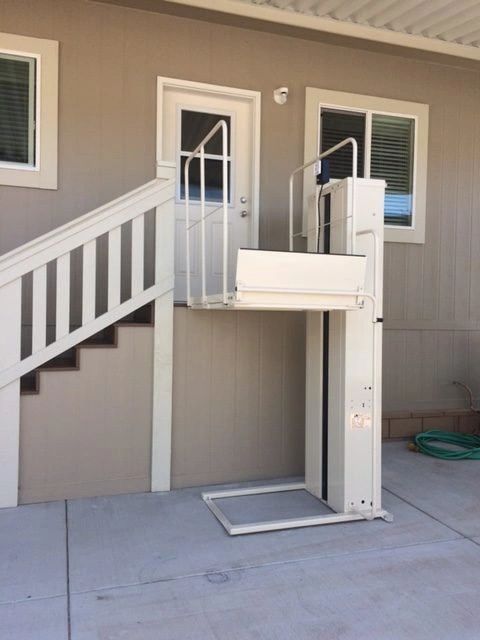
Built for heavier loads than yours
Rated for 750 lb and up
These lifts carry an occupied power wheelchair. Most wheeled robots weigh a fraction of that, so payload is rarely the limiting factor.
No shaft required
A platform lift needs a concrete pad and a power run, not a hoistway. That's what makes it work on an existing building.
Built for outdoors
These lifts live outside year-round. Loading docks, side entrances and courtyards are ordinary territory.
Common places a route dead-ends
- Loading docks and service entrances
- Apartment and condo buildings with stepped entries
- Hotels, resorts and campuses
- Hospitals, clinics and senior living
- Warehouses between floor and dock height
- Schools, libraries and municipal buildings
What we'd need to know
- The rise, in inches
- Robot weight, loaded
- Robot footprint
- Indoor or outdoor
- One site or many
- Photos of the entrance
Twenty-five years of installs
Licensed & bonded
CA Lic# B1139366 / D34. Installed by our own contractors, not subcontracted out.
Statewide
Sacramento to San Diego. One vendor for a multi-site rollout.
Service after the sale
Factory-trained technicians and ongoing maintenance.
Rentals & buy-back
Rent for a pilot. We buy equipment back when a site changes.
Where are your robots getting stuck?
Send a photo of the step and the weight of the robot. We'll tell you what it takes.